 rganauta
Smell: the nose in 3D
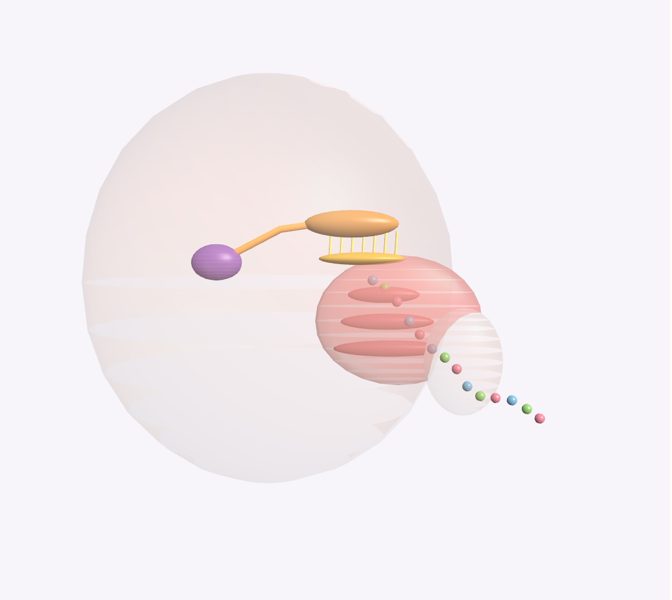
We smell thanks to special neurons in a small area on the roof of the nose. Odor molecules floating in the air dissolve in the mucus and activate…
Explained for every age
For kids (7–11)
Smell is the sense of the nose. It lets you enjoy the smell of fresh bread or flowers, and it also warns you of dangers, like smoke from a fire or food that has gone bad. Plus, it helps a lot when tasting the flavor of food!
For teens (12–16)
We smell thanks to special neurons in a small area on the roof of the nose. Odor molecules floating in the air dissolve in the mucus and activate receptors on those neurons, which send the message straight to the brain's olfactory bulb. Odors can arrive by two routes: through the nostrils when you breathe, or from the mouth, through the back, when you chew. Smell is one of the chemical senses, along with taste, and it is closely linked to emotions and memories.
Pre-Med (17+)
Main olfactory system: olfactory receptor neurons of the olfactory epithelium (roof of the nasal cavity) → olfactory nerve (I) through the cribriform plate of the ethmoid → olfactory bulb glomeruli → mitral and tufted cells → lateral olfactory tract → anterior olfactory nucleus, olfactory tubercle, piriform cortex, amygdala and entorhinal cortex; then orbitofrontal cortex and hippocampus. Combinatorial coding with about 400 functional olfactory receptor genes. Orthonasal route (inhalation) and retronasal route (exhalation, key to flavor). Disorders: hyposmia, anosmia, parosmia and phantosmia; common causes include upper respiratory infections, sinonasal disease, head trauma, age and neurodegenerative diseases.
What you can explore
Nasal cavity (olfactory airflow)Olfactory epitheliumOlfactory receptor neuronOlfactory bulbOdor molecule (odorant)Smell, emotion and memory
Missions
- A smell's journey Explorer
- The code of smells Discoverer
- Transduction and the olfactory bulb Pre-Med