 rganauta
A night of sleep in 3D
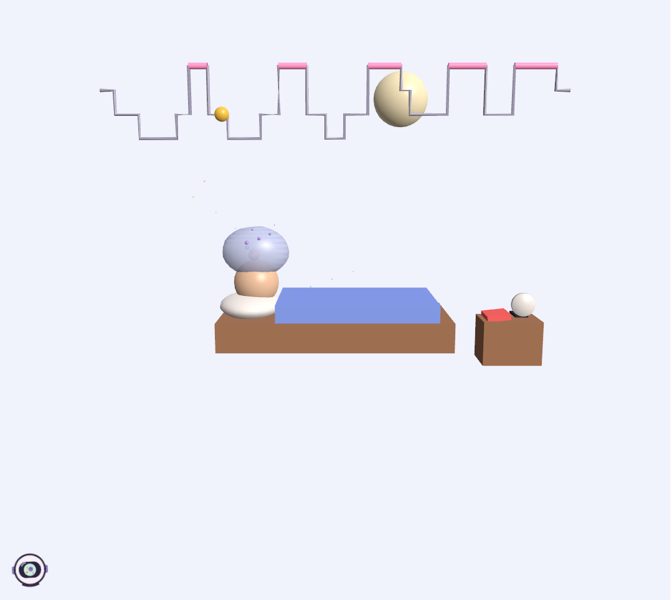
While you sleep, your brain goes through two types of sleep that take turns: non-REM sleep, which goes from light (N1 and N2) to deep (N3), and REM sleep,…
Explained for every age
For kids (7–11)
When you fall asleep, your body doesn't switch off: it gets to work for you! During the night you go around several times through different kinds of sleep, your brain saves what you learned, and your body uses the time to grow and recharge. That's why a good night's sleep helps you grow, learn and feel good.
For teens (12–16)
While you sleep, your brain goes through two types of sleep that take turns: non-REM sleep, which goes from light (N1 and N2) to deep (N3), and REM sleep, when most dreams happen. Each full round is a cycle, and a night has between four and six. When it gets dark, the pineal gland releases melatonin, the hormone that tells the body it is nighttime. Growth hormone is released during deep sleep, and throughout the night the brain strengthens the memories of the day.
Pre-Med (17+)
The scene sums up the architecture of a night: ultradian NREM-REM cycles that repeat every 80 to 100 minutes (about 90 in adults), four to six per night, with N3 predominating in the first half and REM in the second. The circadian rhythm, entrained by light through the suprachiasmatic nucleus, regulates nighttime melatonin secretion by the pineal gland. Slow-wave sleep concentrates the peak of growth hormone and is associated with consolidation of declarative memory; REM, with muscle atonia, with the most vivid dreams. During NREM, parasympathetic tone predominates and heart rate and blood pressure fall.
What you can explore
Sleep stages and cyclesREM sleep (rapid eye movement sleep)Melatonin and the body clockGrowing while you sleepMemory consolidation during sleepSleep needs and healthy sleep habits
Missions
- Good night, brain Explorer
- Read the hypnogram Discoverer
- Sleep architecture Pre-Med