 rganauta
Vitamins and minerals in 3D
Vitamins are substances the body needs to grow and work; minerals are elements, like calcium or iron, that are part of bones, blood, enzymes and hormones.…
Explained for every age
For kids (7–11)
Vitamins and minerals are tiny helpers that come in your food. Each one has its own job: some make your bones strong, others help your blood carry oxygen and others take care of your eyes and your skin. To get them all, the best thing is to eat many different foods of lots of colors.
For teens (12–16)
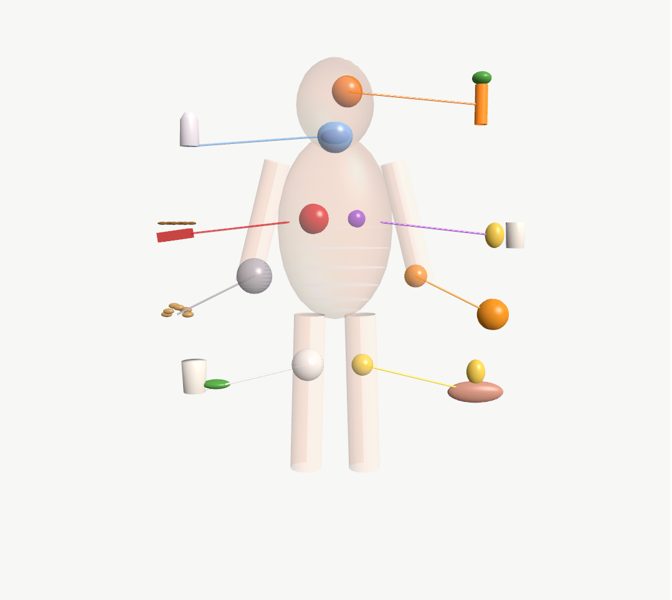
Vitamins are substances the body needs to grow and work; minerals are elements, like calcium or iron, that are part of bones, blood, enzymes and hormones. They are needed in small amounts, but nothing can replace them. This scene shows eight of them in the place in the body where their work is most noticeable: vitamin D and calcium in the bones, iron and vitamin B12 in the blood, iodine in the thyroid, vitamin A in the eyes, and vitamin C and zinc in the skin and the immune defenses. A varied diet usually provides everything you need.
Pre-Med (17+)
Micronutrients comprise 13 vitamins (fat-soluble A, D, E and K; water-soluble C and the eight B-complex vitamins) and the essential minerals, divided into macrominerals (calcium, phosphorus, magnesium, sodium, potassium, chloride, sulfur) and trace elements (iron, zinc, iodine, copper, manganese, selenium, among others). They act as enzyme cofactors, structural components (bone hydroxyapatite), parts of hormones (iodine in T3/T4) or of carriers (iron in heme). The scene groups eight micronutrients by their main target organ; each classic deficiency (rickets, iron-deficiency anemia, goiter, scurvy, night blindness, megaloblastic anemia) illustrates its function. The body can also produce vitamin D (in the skin, with UVB) and vitamin K.
What you can explore
Vitamin DCalciumIronIodineVitamin CVitamin AVitamin B12Zinc
Missions
- The helpers in your food Explorer
- Micronutrient map Discoverer
- Classic micronutrient deficiencies Pre-Med