 rganauta
Battle against a cold in 3D
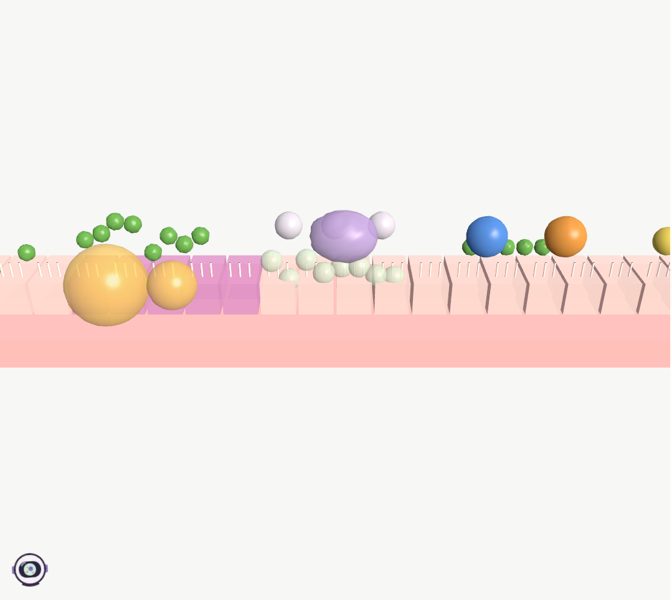
The common cold is a mild infection of the nose and throat; its most frequent cause is rhinoviruses. This scene tells, in five acts, how it unfolds: the…
Explained for every age
For kids (7–11)
Some tiny viruses landed in your nose and want to stay! Here you'll see the battle in five acts: the viruses get in, the cells sound the alarm, the fast defenders arrive, then the specialists with their custom-made weapons, and in the end your body wins and keeps a memory of the invader. Good news: you almost always win in a week or two.
For teens (12–16)
The common cold is a mild infection of the nose and throat; its most frequent cause is rhinoviruses. This scene tells, in five acts, how it unfolds: the virus sticks to the cells lining the nose, copies itself inside them, the infected cells warn others with interferons, innate immunity responds with inflammation, mucus and sneezing, and a few days later adaptive immunity (T lymphocytes and antibodies) finishes the job and leaves memory cells behind. A key fact: much of the symptoms are produced by the body's own defense, not by the damage the virus does.
Pre-Med (17+)
Sequential model of a rhinovirus infection of the nasal mucosa: adhesion to the respiratory epithelium (ICAM-1 for most type A and B viruses, LDL receptor for the minor group, CDHR3 for type C), intracellular replication and release of interferons, chemokines and cytokines; innate response with vasodilation, increased permeability and glandular secretion (rhinorrhea, congestion, sneezing) and recruitment of phagocytes; significant adaptive response by about 4 to 7 days, with cytotoxic T lymphocytes and neutralizing antibodies against VP1-VP3 epitopes, and type-specific memory. Rhinovirus does not usually destroy the nasal epithelium: symptoms are attributed mainly to the host's inflammatory mediators. Self-limited illness; antibiotics are not indicated.
What you can explore
Rhinovirus entryInfected cell and interferon alarmInnate defense in the noseAdaptive defense against a coldRecovery and memory cellsHygiene against colds
Missions
- Your body wins the battle! Explorer
- Innate versus adaptive Discoverer
- Immunology of a viral rhinopharyngitis Pre-Med