 rganauta
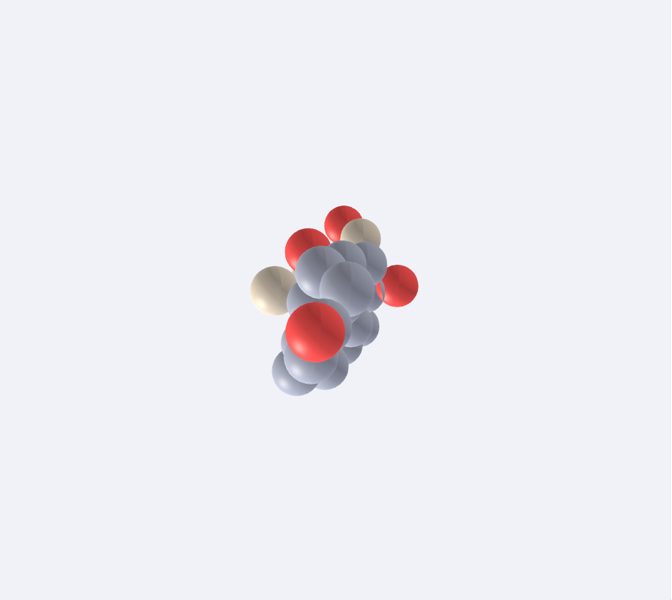
Cortisol (real molecule) in 3D
Cortisol is the main long-lasting stress hormone. The cortex of the adrenal glands makes it from cholesterol when the pituitary sends the ACTH signal. It…
▶ Open it in your browser with your class codeNothing to install · best on a computer
Explained for every age
For kids (7–11)
Cortisol is a hormone made by the glands that sit on top of your kidneys. It helps you wake up in the morning, keeps your energy up when you go hours without eating and helps your body get through tough days.
For teens (12–16)
Cortisol is the main long-lasting stress hormone. The cortex of the adrenal glands makes it from cholesterol when the pituitary sends the ACTH signal. It raises blood sugar, helps the body use its energy stores and calms inflammation. It has a daily rhythm: it is highest when you wake up and lowest at night. Many anti-inflammatory medicines, such as prednisone, are similar to cortisol.
Pre-Med (17+)
Glucocorticoid (C₂₁H₃₀O₅) from the zona fasciculata of the adrenal cortex, synthesised from cholesterol under the control of the hypothalamic–pituitary–adrenal axis (CRH → ACTH → cortisol, with negative feedback). Circadian rhythm with a peak on waking and a nadir around midnight. About 90 % circulates bound to transcortin (CBG) and albumin. It acts through nuclear receptors (GR): gluconeogenesis, lipolysis and proteolysis; anti-inflammatory and immunosuppressive (inhibits phospholipase A₂ via lipocortin and NF-κB); permissive effect on catecholamines. Renal 11β-HSD2 inactivates it to cortisone and protects the mineralocorticoid receptor.
What you can explore
Steroid nucleusCortisol oxygensMethyls and side chain
Missions
- The wake-up hormone Explorer
- Stress that lasts Discoverer
- Hypothalamic–pituitary–adrenal axis Pre-Med
- Clinical case: adrenal crisis Pre-Med