 rganauta
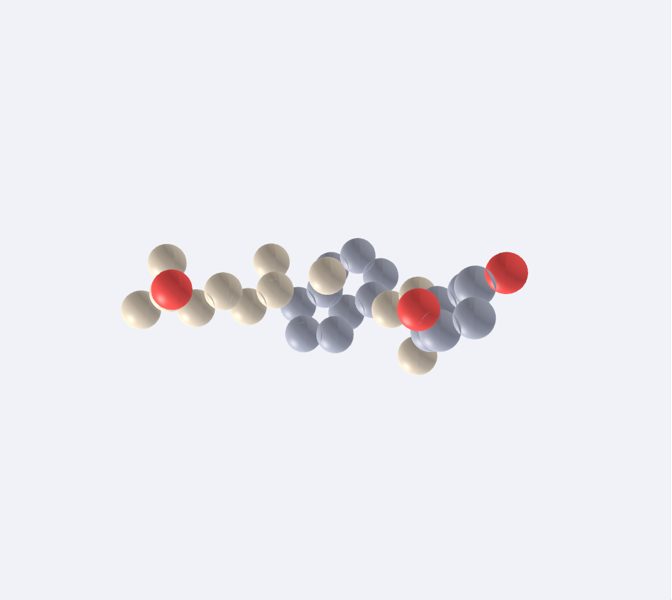
Active vitamin D (real molecule) in 3D
Vitamin D is made in the skin with ultraviolet light from the sun or comes in some foods, but in that form it doesn't work yet: the liver and then the…
▶ Open it in your browser with your class codeNothing to install · best on a computer
Explained for every age
For kids (7–11)
This is vitamin D, ready to work. Your skin starts making it with sunlight, and then your liver and kidneys finish it. It helps the calcium from milk and other foods get to your bones.
For teens (12–16)
Vitamin D is made in the skin with ultraviolet light from the sun or comes in some foods, but in that form it doesn't work yet: the liver and then the kidney add two –OH groups and turn it into calcitriol, the active form. Calcitriol makes the intestine absorb more calcium and phosphorus, the building materials of bones. That's why, when vitamin D is lacking, bones become soft.
Pre-Med (17+)
1α,25-dihydroxycholecalciferol (C₂₇H₄₄O₃), a secosteroid (the B ring of cholesterol is open). Synthesis: 7-dehydrocholesterol + UVB in the skin → cholecalciferol (D₃) → hepatic 25-hydroxylation (calcidiol, the one measured to assess stores) → renal 1α-hydroxylation by CYP27B1, stimulated by PTH and hypophosphataemia and inhibited by FGF23 and calcitriol itself. It acts through the nuclear receptor VDR: increases intestinal absorption of calcium (TRPV6, calbindin) and phosphate, modulates bone remodelling and suppresses PTH. Half-life ≈ 4–6 h, compared with 2–3 weeks for calcidiol.
What you can explore
Calcitriol ringsThe three –OH groupsCalcitriol carbon chains
Missions
- The sunshine vitamin Explorer
- Three steps to switch on Discoverer
- Calcitriol, PTH and the kidney Pre-Med
- Clinical case: bone pain in an older woman Pre-Med