 rganauta
Allergies: when the body overreacts in 3D
An allergy is an exaggerated response of the immune system to something that is harmless for most people, called an allergen: pollen, dust mites, animal…
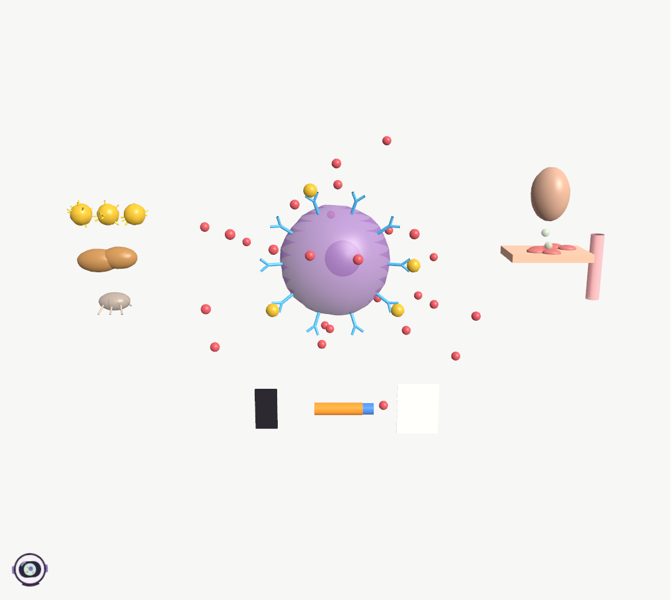
Explained for every age
For kids (7–11)
Your defenses are like guards that protect your body from germs. Sometimes they get confused and sound the alarm about something that is not harmful, like pollen from flowers, dust or a food. That is an allergy: you may get sneezes, a runny nose or itchy bumps called hives. If you feel very sick after eating something, tell an adult right away.
For teens (12–16)
An allergy is an exaggerated response of the immune system to something that is harmless for most people, called an allergen: pollen, dust mites, animal dander, mold, foods, insect stings or medicines. The body mistakes it for a threat and sets off a false alarm, which can cause sneezing, a runny nose, itching, hives, swelling or asthma. Most reactions are mild, but the most serious one, anaphylaxis, is an emergency.
Pre-Med (17+)
Most allergies are type I (immediate) hypersensitivity reactions, mediated by IgE. In a first phase, sensitization, B cells stimulated by Th2 helper T cells produce allergen-specific IgE, which binds to the FcεRI receptors of mast cells and basophils. On re-exposure, the allergen cross-links the bound IgE and triggers degranulation, releasing histamine and other mediators within minutes; a late phase may follow hours later. Manifestations range from rhinitis, conjunctivitis, urticaria and asthma to systemic anaphylaxis. IgE also takes part in the defense against some parasites, which helps explain why this mechanism exists.
What you can explore
AllergenIgE and mast cellHistamineAnaphylaxisEpinephrine autoinjectorAllergy action plan
Missions
- The false alarm Explorer
- The allergic cascade Discoverer
- Type I hypersensitivity Pre-Med