 rganauta
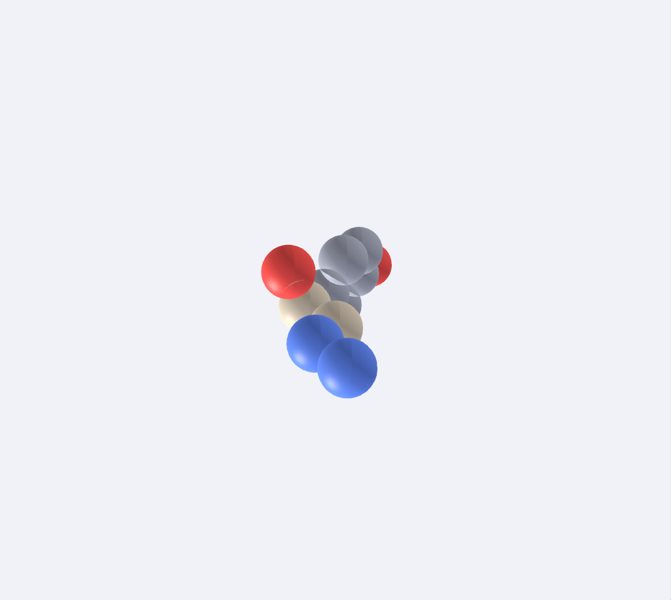
Adrenaline (real molecule) in 3D
Adrenaline (or epinephrine) is a hormone and neurotransmitter made by the inner part of the adrenal glands, the medulla. It is released within seconds in…
▶ Open it in your browser with your class codeNothing to install · best on a computer
Explained for every age
For kids (7–11)
This is the molecule of fright and racing. When something scares you or you have to run fast, some glands that sit on top of your kidneys release it into your blood: your heart beats harder, you breathe faster and your muscles get more energy. It's tiny: here you can see all of its atoms.
For teens (12–16)
Adrenaline (or epinephrine) is a hormone and neurotransmitter made by the inner part of the adrenal glands, the medulla. It is released within seconds in response to stress or danger and gets the body ready to "fight or flight": it speeds up the heart, opens the airways, raises blood sugar and sends more blood to the muscles. Its effect lasts only a few minutes because the body breaks it down very quickly. It belongs to the catecholamine family.
Pre-Med (17+)
Catecholamine (C₉H₁₃NO₃) synthesised in the chromaffin cells of the adrenal medulla from tyrosine: tyrosine → L-DOPA (tyrosine hydroxylase, rate-limiting step) → dopamine → noradrenaline → adrenaline (phenylethanolamine N-methyltransferase, PNMT, induced by cortisol arriving through the portal circulation from the cortex). It acts on G protein-coupled receptors: α₁ (cutaneous and splanchnic vasoconstriction), β₁ (inotropy and chronotropy), β₂ (bronchodilation, muscle vasodilation, glycogenolysis). Plasma half-life of about 2–3 minutes; COMT and MAO break it down to metanephrines and vanillylmandelic acid.
What you can explore
Catechol ringAdrenaline –OH groupsMethylated amino groupAdrenaline side chain
Missions
- Clinical case: Sting and anaphylaxis Pre-Med
- The fright molecule Explorer
- Fight or flight Discoverer
- Receptors and catecholamines Pre-Med